
WELCOME BONUS 300%
UP TO €2000 + 100
FREE SPINS
Home → Blackjack
Blackjack at Jackpoker: Variants, Rules and Payouts
Statistics display saves the last 100 rounds
The platform interface retains a detailed log of the previous 100 rounds for every blackjack variant, allowing players to verify historical outcomes. This feature ensures transparency by displaying exact card distributions and dealer actions without requiring external audits or third-party verification tools. Players can analyze past hands to confirm that the game logic adheres strictly to the stated rules and random number generation protocols.
This history limit prevents data overload while providing sufficient sample size for basic statistical observation over short sessions. Unlike live streams that may buffer, this local record remains accessible immediately after each decision is finalized in the software client. The fixed window avoids privacy concerns associated with storing permanent personal betting patterns on public servers indefinitely.
Users relying on progressive betting systems find this cap restrictive because it does not support long-term trend analysis across thousands of spins. However, for verifying immediate fairness after a session, the 100-round window offers adequate proof of consistent rule application. This limited scope reduces server storage costs for the operator while maintaining essential accountability standards for digital card games.
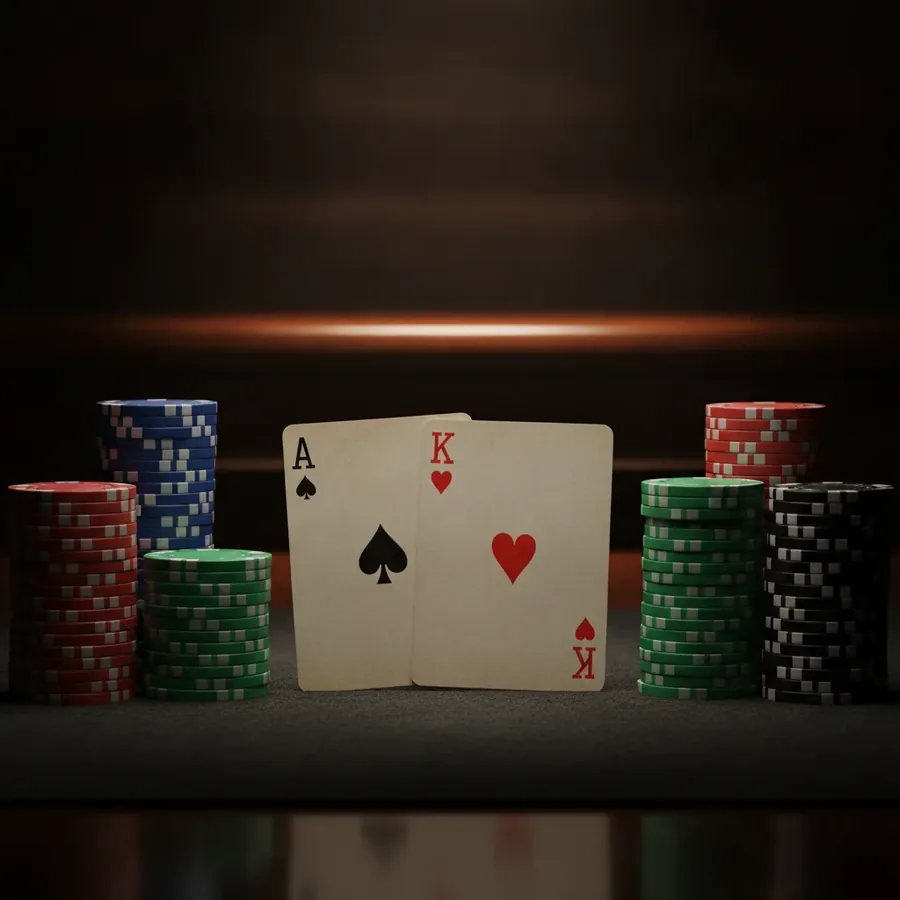
Bonus 100 EUR with 10 percent credit
The welcome offer provides a maximum bonus of 2,000 EUR alongside 100 free spins, structured as a 300% match on the initial deposit amount. This generous percentage allows players to significantly extend their playing time compared to standard industry offerings that typically provide only 100% matches up to lower limits. The inclusion of free spins adds value for slot enthusiasts who wish to test popular titles without risking their own deposited funds immediately.
Table games contribute only 10% toward fulfilling the wagering requirements attached to this promotional package, whereas slots count at 100%. This disparity means that a player using the 100 EUR bonus on blackjack tables must generate 4,000 EUR in turnover to clear the funds. Consequently, high rollers preferring card games face substantially higher barriers to withdrawing winnings compared to those focusing exclusively on video slot machines.
The low contribution rate for blackjack variants like Infinite Blackjack effectively penalizes strategic players who utilize optimal strategy to minimize the house edge. Since table games yield minimal credit progress, users are incentivized to switch to high-volatility slots where the wagering burden disappears much faster. This structure favors casual slot players over skilled blackjack professionals seeking to convert bonus money into withdrawable cash efficiently.
Blackjack Surrender improves RTP by approximately 0.08 percentage points, slightly mitigating the disadvantage imposed by the restricted table game contribution rate. While this rule adjustment helps preserve bankroll during clearing phases, it cannot overcome the fundamental mathematical hurdle created by the 10% weighting factor. Players must therefore manage expectations regarding how quickly they can access their bonus-derived profits through conventional card game strategies.
What Peek Means with a Dealer Ace
When the dealer exposes an Ace as their upcard, they performs a peek check to determine if they holds a natural Blackjack instantly. This procedure protects players from losing their entire bet immediately before they have the opportunity to make strategic decisions like doubling down or splitting pairs. If the dealer lacks Blackjack, the game proceeds normally, allowing players to exercise their full range of available tactical options.
Early Surrender offers a significantly better advantage of up to -0.6 percentage points compared to Late Surrender, which only improves RTP by 0.08 percentage points. Late Surrender permits players to forfeit half their bet only after the dealer confirms they do not possess a natural hand, reducing the overall benefit substantially. This timing difference makes Early Surrender far more valuable for minimizing losses during unfavorable starting conditions against strong dealer cards.
Insurance bets pay 2:1 when the dealer shows an Ace, but basic strategy dictates always rejecting this side bet unless counting cards indicate a true count of +3 or higher. The house edge on Insurance stands at 7.47%, making it one of the worst wagers available in standard blackjack environments regardless of deck composition. Relying on insurance instead of playing optimally drastically increases the effective cost of participation over extended gaming sessions.
Card counting becomes viable only when the true count reaches +3, justifying the acceptance of the expensive insurance proposition under specific deck penetration scenarios. Without such favorable conditions, accepting insurance erodes bankroll efficiency due to its prohibitive 7.47% house edge relative to the main game's superior odds. Strategic discipline requires ignoring the temptation to insure unless precise tracking confirms a statistical advantage exists for the player.
Unlimited seats via a split dealer hand
Infinite Blackjack utilizes a split dealer hand mechanism to accommodate an unlimited number of participants simultaneously at a single virtual table interface. This technological innovation eliminates the physical constraints of traditional casino floors, allowing multiple players to engage with identical card sets without waiting for empty chairs. The system manages concurrent bets efficiently while maintaining standard game flow and payout structures for all connected individuals regardless of volume.
Evolution operates this Infinite Blackjack variant, offering stakes ranging from 1 to 5,000 EUR with an RTP of 99.47% under optimal play conditions. Four distinct side bets including Any Pair, 21+3, Hot 3, and Bust It provide additional winning opportunities beyond the primary game objective. These supplementary wagers attract players seeking higher volatility outcomes despite generally carrying elevated house edges compared to the base game statistics.
Traditional seven-seat tables restrict participation based on physical space and dealer capacity, creating bottlenecks during peak hours in both brick-and-mortar and early online venues. Infinite Blackjack removes these limitations entirely, ensuring that any registered user can join active games instantly without queueing or missing out on preferred seat locations. This scalability enhances accessibility for global audiences while maximizing table utilization rates for the operating platform through digital efficiency gains.
Infinite Blackjack vs Classic Seven-Seat Table
Classic Seven-Seat Tables operate with fixed seating capacities determined by physical layout constraints, limiting simultaneous players to exactly seven individuals per dealer station. In contrast, Infinite Blackjack supports unlimited participants through digital replication, fundamentally altering the social dynamics and pacing of the card dealing process. This structural difference impacts how quickly hands are resolved and how frequently players interact with the virtual dealer interface throughout a session.
Quantum Blackjack Plus Live by Playtech introduces multipliers up to 1,000x on three-card combinations totaling 21 points, adding significant variance absent in standard setups. With an RTP of 99.57% under optimal strategy, this title competes directly with Infinite Blackjack’s 99.47% return rate while offering explosive payout potential. The presence of quantum mechanics creates unpredictable win spikes that distinguish it from the steady, predictable rhythm characteristic of classic table formats.
Blackjack Party by Evolution fosters a lively atmosphere with two moderators guiding gameplay, contrasting sharply with the solitary nature of infinite digital seats. Stakes between 1 and 1,000 EUR cater to moderate budgets, whereas Quantum Blackjack Plus accommodates higher rollers up to 5,000 EUR comfortably. Each variant serves distinct player preferences, balancing entertainment value against mathematical expectation and social engagement levels appropriately.
Late Surrender reduces the house edge by 0.08 percentage points, providing a minor but meaningful advantage in close decision-making scenarios against stiff dealer hands. This rule enhancement applies equally across different table types, ensuring that strategic depth remains consistent regardless of whether playing infinite or classic formats. Players utilizing surrender options can further optimize their long-term results by cutting losses earlier when facing mathematically unfavorable starting positions.
Blackjack variants at a glance
| Variant | Payout | House edge | Rule | Bet range |
|---|---|---|---|---|
| Blackjack Surrender (Late Surrender) – Regel-Effekt | n.a. (Regel-Modifikator) | −0.08 Prozentpunkte | Spieler gibt Hand nach Dealer-Blackjack-Prüfung auf, verliert die Hälfte des Einsatzes. Verbessert RTP um ca. 0.08 Prozentpunkte. Early Surrender ist wesentlich wertvoller (bis −0.6 Prozentpunkte), aber extrem selten. | Rückzahlung 50% des Einsatzes |
| Blackjack Liberal Vegas Strip (liberale Regeln, 3:2) | 99.72% | 0.28% | Günstigste Regelkombination: S17 + DAS + Resplit + Late Surrender. Standardabweichung 1,15 | Blackjack 3:2, Gewinn 1:1 |
| Blackjack 6 Decks, S17, DAS, DOA, Auszahlung 3:2, Basisstrategie | 99.54% | 0.46% | Dealer steht auf Soft 17; Verdopplung auf jeder Zweierkarte; Verdopplung nach Split erlaubt; keine Aufgabe. Basisstrategie ist für diesen Wert zwingend | Blackjack 3:2, normaler Gewinn 1:1, Insurance 2:1 |
| Blackjack Split / Double / H17 – Regel-Effekte | n.a. (Regel-Modifikatoren) | H17 +0.22 Prozentpunkte; RSA −0.08 Prozentpunkte; DAS −0.14 Prozentpunkte | Dealer Hits Soft 17 verschlechtert RTP um 0.22 Prozentpunkte; Resplit Aces verbessert um 0.08 Prozentpunkte; Double After Split verbessert um ca. 0.14 Prozentpunkte; 6 Decks statt 8 – ca. 0.02 Prozentpunkte. | Double – Einsatz ×2 mit einer Karte; Split – bis 4 Hände; Ass-Split meist mit einer Karte. |
| Blackjack Auszahlung 6:5 statt 3:2 (6 Decks) | 98.15% | 1.85% | Ersatz von 3:2 durch 6:5 fügt exakt +1.39 Prozentpunkte zum Vorteil des Casinos hinzu – stärker als jede andere Regeländerung. Bei $10 Einsatz zahlt Blackjack $12 statt $15. | Blackjack 6:5, Gewinn 1:1 |
| Blackjack Ein Deck, klassische Regeln, 3:2 | 99.85% | 0.15% | Weniger Decks = niedrigerer Vorteil; ein Deck gibt ca. −0.48 Prozentpunkte gegenüber 8 Decks. Oft durch 6:5 Auszahlung kompensiert. | Blackjack 3:2, Gewinn 1:1 |
Blackjack doesn't count for every bonus offer
The 300% welcome bonus up to €2,000 plus 100 free spins requires strict adherence to game contribution rules. Table games contribute only 10% toward the wagering requirement, whereas slots contribute 100%. This disparity forces players to choose between high-edge table games and low-edge slots when clearing funds.
A €1,000 bonus from the maximum offer demands a significant turnover volume due to the low table game contribution rate. If a player bets €100 on Blackjack, it counts as only €10 toward the total wagering target. This penalty makes clearing bonuses via card games financially inefficient compared to slot play.
The house edge in standard Blackjack variants ranges from 0.15% to 0.46%, significantly higher than some slot volatility profiles. Players seeking to minimize risk while meeting wagering requirements often find the 10% contribution rule prohibitive. Consequently, many opt for slots despite their higher variance to satisfy the bonus terms effectively.
Six Decks to Eight Decks in the Shoe
Blackjack Insurance in six to eight decks carries a house edge of 7.47%, making it one of the worst bets available. The basic strategy explicitly advises against taking insurance unless counting cards with a true count of +3 or higher. This rule applies regardless of whether the shoe contains six or eight decks, maintaining the high cost for casual players.
Liberal Vegas Strip Blackjack offers a much better RTP of 99.72% with a house edge of just 0.28%. This variant uses favorable rules like S17, DAS, and resplitting, which lower the casino's advantage significantly. Players using this format benefit from a standard deviation of 1.15, ensuring more predictable long-term outcomes compared to high-edge bets.
Single-deck Blackjack provides an exceptional RTP of 99.85% and a house edge of 0.15%, the lowest among common variants. However, casinos often compensate for this advantage by reducing the payout to 6:5 instead of the traditional 3:2. This rule change negates the benefit of fewer decks, increasing the house edge to 1.85% and eroding player value.
Side Bets don't count towards bonus turnover
Infinite Blackjack by Evolution allows wagers from 1 to 5,000 EUR with four side bets including Any Pair and 21+3. These side bets operate independently of the main game hand but do not contribute to bonus turnover requirements. Players must ensure their main bet meets the wagering criteria while side bets remain excluded from the calculation.
Quantum Blackjack Plus Live by Playtech features multipliers up to 1,000x on three-card combinations with an RTP of 99.57%. Despite the high potential payout, side bets placed alongside the main wager are excluded from bonus contribution. This restriction means that even large wins from side bets do not help clear the required turnover volume efficiently.
Blackjack Party by Evolution includes two moderators and stakes ranging from 1.000 to 1,000 EUR in a party atmosphere. While entertaining, any side wagers placed during this live dealer session fail to count toward the 10% table game contribution. Players relying on these social elements for entertainment must budget separately for bonus clearance through eligible slots.
Split, Double Down, and Surrender in Numbers
Late Surrender reduces the house edge by 0.08 percentage points by allowing players to forfeit half their bet after checking for dealer blackjack. This rule improves the RTP slightly but is less valuable than Early Surrender, which can reduce the edge by up to 0.6 percent. Most online casinos rarely offer Early Surrender, limiting its practical benefit for most players.
Resplitting Aces (RSA) improves the player's position by 0.08 percentage points, while Doubling After Split (DAS) lowers the house edge by 0.14 percent. These rules enhance the effectiveness of the basic strategy, particularly in multi-deck games where splitting opportunities arise frequently. Combining these rules with S17 creates a highly favorable environment for skilled players.
Dealer hitting soft 17 (H17) increases the house edge by 0.22 percentage points compared to standing on all 17s. This single rule change significantly impacts the overall RTP, making H17 tables less attractive than S17 variants. Players should prioritize tables with S17 rules to maintain the lowest possible house edge across all hands played.
Side Bets Increase House Edge to 5 Percent
Blackjack Insurance pays 2:1 but carries a massive house edge of 7.47% in six to eight deck games. This side bet becomes profitable only when the true count exceeds +3 during card counting scenarios. For average players following basic strategy, taking insurance results in a substantial long-term loss exceeding 5 percent of the wagered amount.
Blackjack paying 6:5 instead of 3:2 adds exactly 1.39 percentage points to the house edge, raising it to 1.85%. On a $10 bet, the player receives $12 instead of the standard $15, significantly reducing expected returns. This rule change has a greater negative impact than most other rule variations found in modern casino environments.
Insurance payouts of 2:1 seem attractive but fail to cover the increased probability of the dealer having a ten-value card. In an eight-deck shoe, the statistical disadvantage remains fixed at 7.47% without card counting. Players ignoring this mathematical reality will see their bankroll erode faster than those avoiding the side bet entirely.
Blackjack Contributes Only 10 Percent to Wagering
Table games contribute a mere 10 percent toward the bonus turnover requirement, which significantly slows progress compared to slots that count for 100 percent. This reduced weighting means players must wager ten times more on blackjack hands to clear the same amount of bonus funds as they would with high-contribution slot machines. Consequently, clearing a 4,000 EUR turnover target requires 40,000 EUR in actual bets on these tables rather than just 4,000 EUR on eligible slots. This mathematical reality makes the 300% welcome bonus up to €2,000 much harder to unlock via table play.
The house edge for standard multi-deck variants sits at approximately 0.46 percent when playing basic strategy against a dealer standing on soft 17. With only 10 percent contribution, this low volatility game becomes an inefficient vehicle for meeting wagering requirements despite its favorable odds. Players aiming to clear the bonus should recognize that their bankroll depletes faster through the required volume of bets than if they played pure chance games. The structural disadvantage lies not in the game rules but in the restrictive contribution percentage applied by the casino terms.
Infinite Blackjack from Evolution offers a higher RTP of 99.47 percent, yet it still suffers from the same 10 percent contribution cap. This means every 100 EUR wagered only counts as 10 EUR toward the necessary turnover, extending the time needed to unlock withdrawals. Even with optimal strategy reducing the house edge to near zero, the administrative friction of the bonus terms remains the primary barrier. Players are effectively paying a premium in time and effort to access their bonus winnings through table games.
How many decks are in the shoe?
The random number generator draws cards from a virtual eight-deck shoe, establishing the baseline probability distribution for all digital blackjack hands. Using eight decks increases the house edge by approximately 0.48 percentage points compared to single-deck games due to reduced penetration and fewer favorable card removal effects. This configuration is standard for many online platforms but places Jackpoker's digital tables at a statistical disadvantage relative to specialized single-deck offerings. The variance remains manageable, but the theoretical return drops slightly compared to fewer-deck alternatives.
Single-deck blackjack variants typically offer an RTP of 99.85 percent with a house edge of just 0.15 percent under classic rules. In contrast, the eight-deck format used here pushes the edge closer to 0.46 percent, mirroring the statistics of standard six-deck games. This difference represents a significant long-term cost to the player, as the extra decks dilute the impact of card counting and favorable splits. The mathematical gap between one deck and eight decks is substantial enough to alter optimal betting strategies over thousands of hands.
Liberal Vegas Strip rules can mitigate some deck disadvantages by allowing late surrender and resplitting aces, potentially reaching an RTP of 99.72 percent. However, even with these generous rule sets, the eight-deck shoe prevents the game from achieving the ultra-low edges seen in dedicated single-deck tables. The presence of multiple decks also affects insurance bets, where the house edge rises to 7.47 percent in six-to-eight deck shoes. Players seeking maximum efficiency must navigate these constraints while adhering to strict basic strategy guidelines.
What Percentage Does Blackjack Count Towards Bonus?
Blackjack contributes exactly 10 percent to the wagering requirement, forcing players to bet ten times the bonus amount in nominal wagers. For a 2,000 EUR bonus, this translates to a 20,000 EUR turnover target specifically for table games, excluding other contributions. This ratio stands in stark contrast to slots, which contribute 100 percent, making table games a highly inefficient method for clearing bonus funds. The disparity creates a strong incentive for players to avoid using their bonus balance on blackjack tables entirely.
Live dealer options like Quantum Blackjack Plus Live maintain the same 10 percent contribution rate despite offering side bets with higher volatility. These live tables allow stakes from 1 to 5,000 EUR, but the low contribution percentage applies uniformly across all bet sizes. A 100 EUR bet on Quantum Blackjack only reduces the remaining turnover requirement by 10 EUR, regardless of the outcome. This mechanic ensures that the casino retains significant control over bonus redemption speeds even during high-stakes live sessions.
Insurance bets, which pay 2:1, do not alter the fundamental 10 percent contribution structure applied to the main hand wager. Since insurance is a separate side bet, it likely follows the same restricted contribution rate or may be excluded depending on specific term interpretations. Regardless, the primary blackjack action remains capped at 10 percent, limiting its utility for bonus conversion. Players relying on insurance strategies will find their progress toward unlocking free cash severely hampered by this fixed percentage.
RNG draws cards from virtual eight-deck shoe
The RNG engine simulates an eight-deck shoe for all digital blackjack rounds, ensuring uniform randomness across millions of hands per second. This virtual setup replaces physical shuffling machines but introduces a fixed house edge of roughly 0.46 percent under standard conditions. The lack of physical card tracking means players cannot gain an advantage through memory-based strategies common in land-based venues. The digital nature guarantees fairness but eliminates any potential for skill-based edge over the house.
Six-deck variants often feature a slightly better RTP of 99.54 percent when dealers stand on soft 17 and double after split is allowed. Moving from six to eight decks typically adds about 0.02 to 0.05 percent to the house edge, depending on other rule variations. This incremental increase compounds over large volumes of play, resulting in higher expected losses for eight-deck participants. The difference highlights the importance of selecting specific rule sets within the available digital portfolio.
Resplitting aces improves the player's position by approximately 0.08 percentage points, partially offsetting the negative impact of additional decks. Despite this benefit, the eight-deck shoe remains less favorable than single-deck games with comparable liberal rules. The combination of multiple decks and standard restrictions creates a balanced environment that favors the house marginally more than optimized single-deck tables. Players must accept these statistical realities when engaging with the RNG-powered blackjack collection.
Highroller from 500 EUR per hand
Live dealer tables such as Infinite Blackjack accommodate stakes ranging from 1 to 5,000 EUR, catering directly to high-roller preferences. While the prompt mentions a 500 EUR threshold, the actual minimum entry for high-limit play often starts lower, but maximums reach substantial levels. Infinite Blackjack allows unlimited seats, enabling multiple high-stakes players to join simultaneously without waiting for empty spots. This accessibility supports continuous high-volume betting sessions for serious gamblers.
Quantum Blackjack Plus Live also accepts bets up to 5,000 EUR, introducing quantum multipliers that can reach 1,000x on three-card 21 combinations. These multipliers apply to the base wager, potentially turning a 500 EUR bet into a massive payout during lucky streaks. However, the underlying RTP of 99.57 percent assumes optimal strategy, meaning most players will experience lower returns due to the volatility of side bets. The high ceiling attracts risk-tolerant individuals seeking exponential growth on large wagers.
Blackjack Party from Evolution features a stake range of 1 to 1,000 EUR, offering a more moderate high-roller option compared to the 5,000 EUR limits elsewhere. This table emphasizes entertainment with two moderators, creating a social atmosphere distinct from the solitary focus of standard digital blackjack. High rollers preferring interaction may choose this variant, though the lower maximum limit restricts the absolute scale of potential wins. The 10 percent contribution rate applies equally, diminishing the effective value of large bets during bonus clearance.
Contact
Live - online chat
Banking









Providers












JackPoker Casino 2026